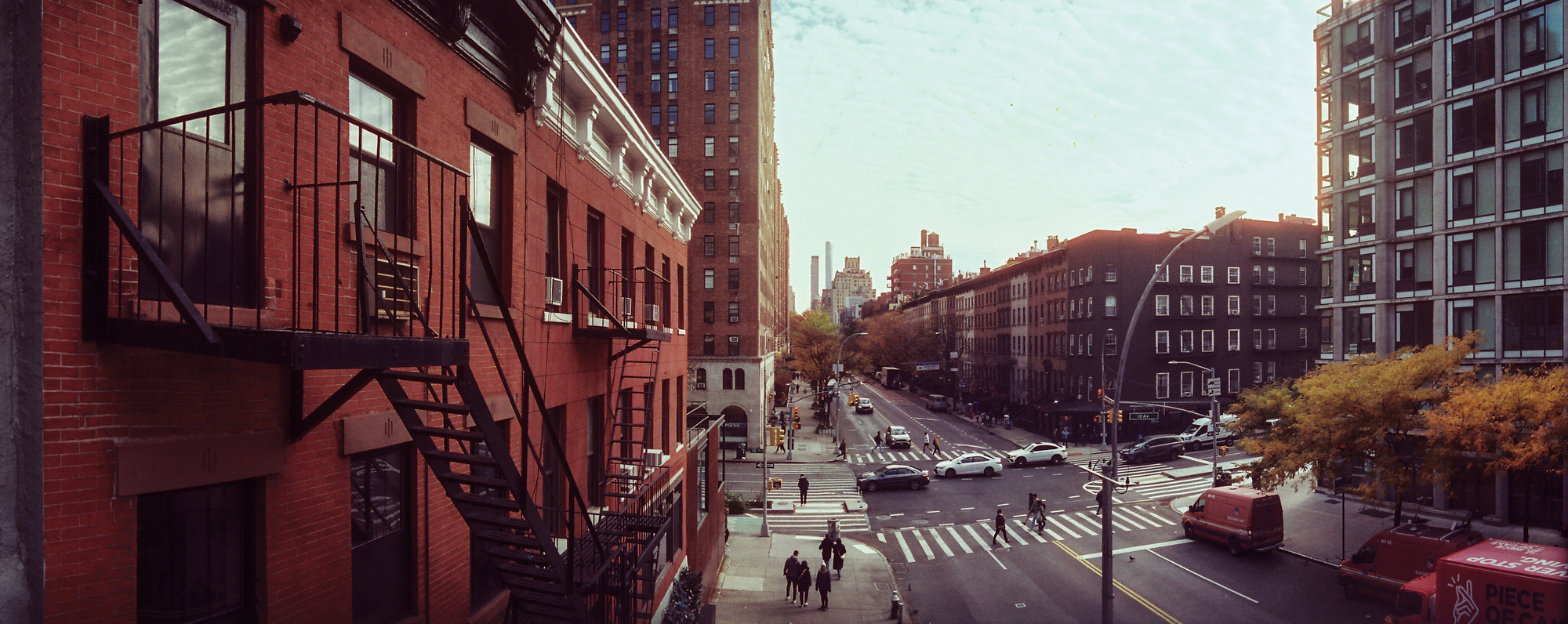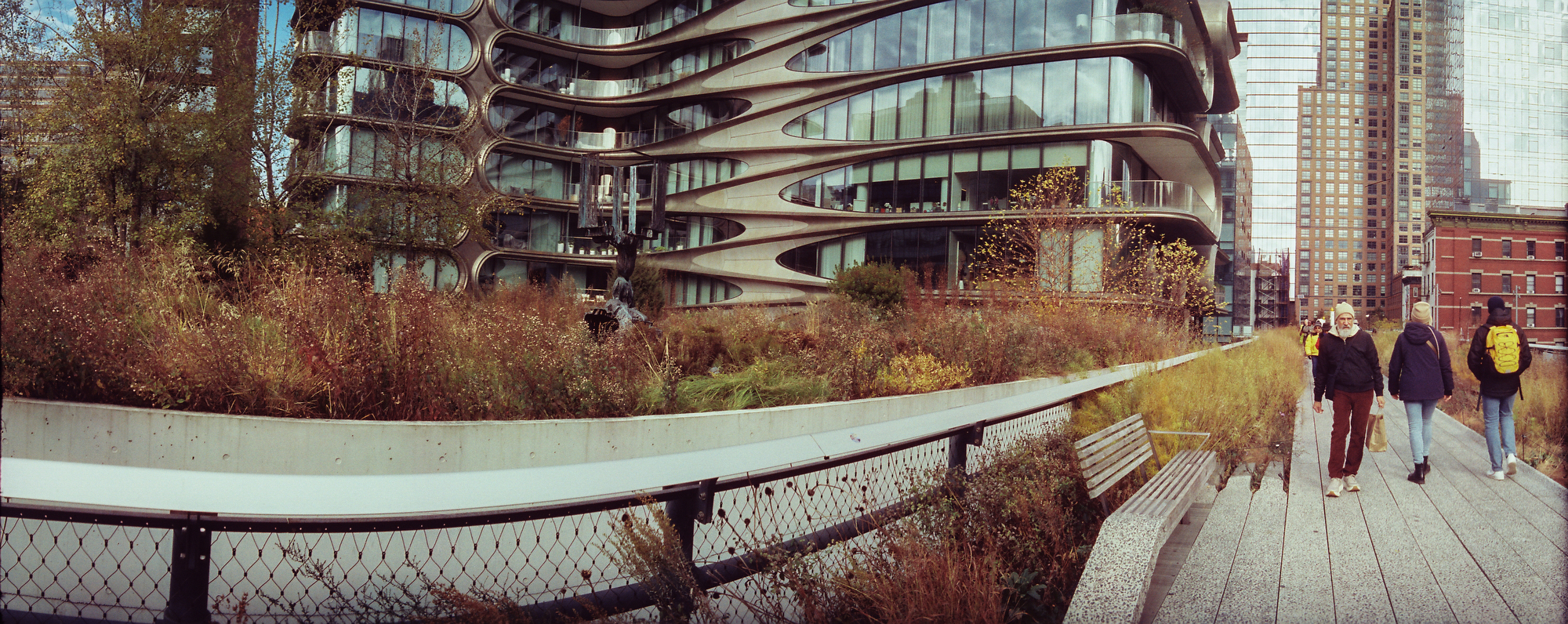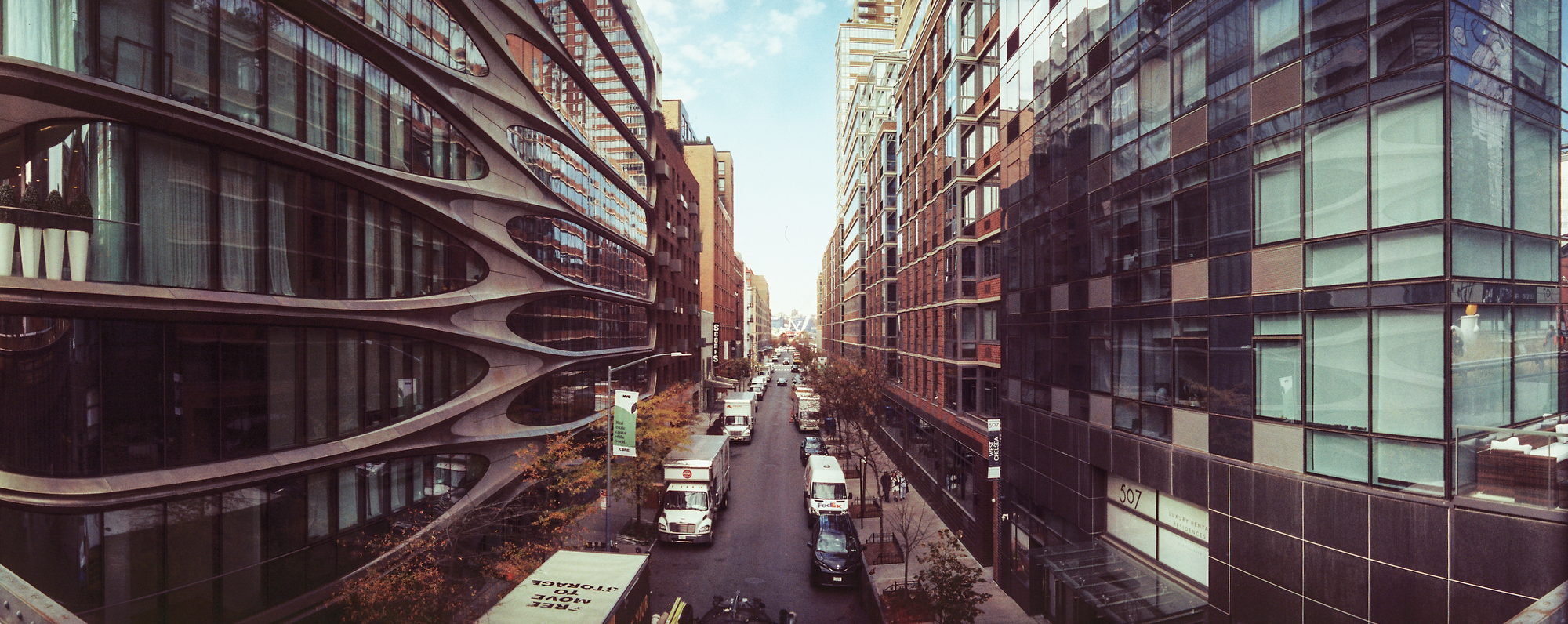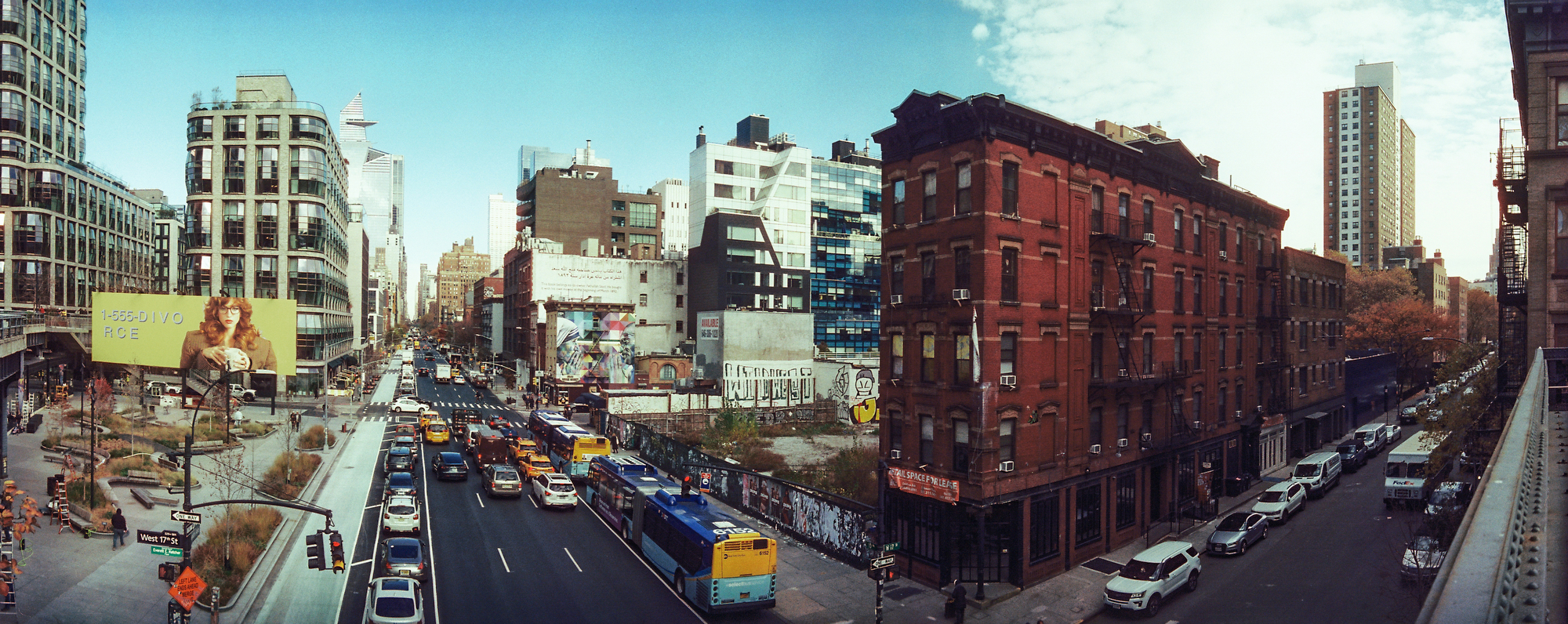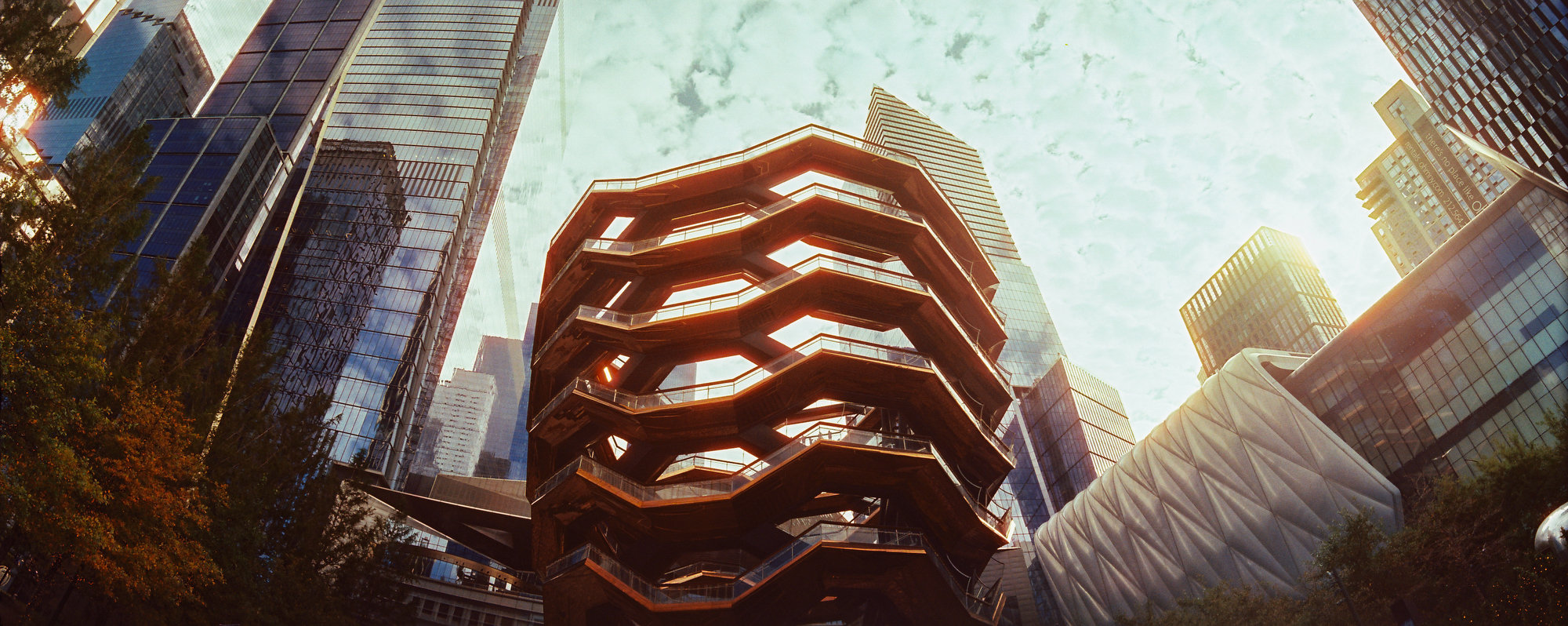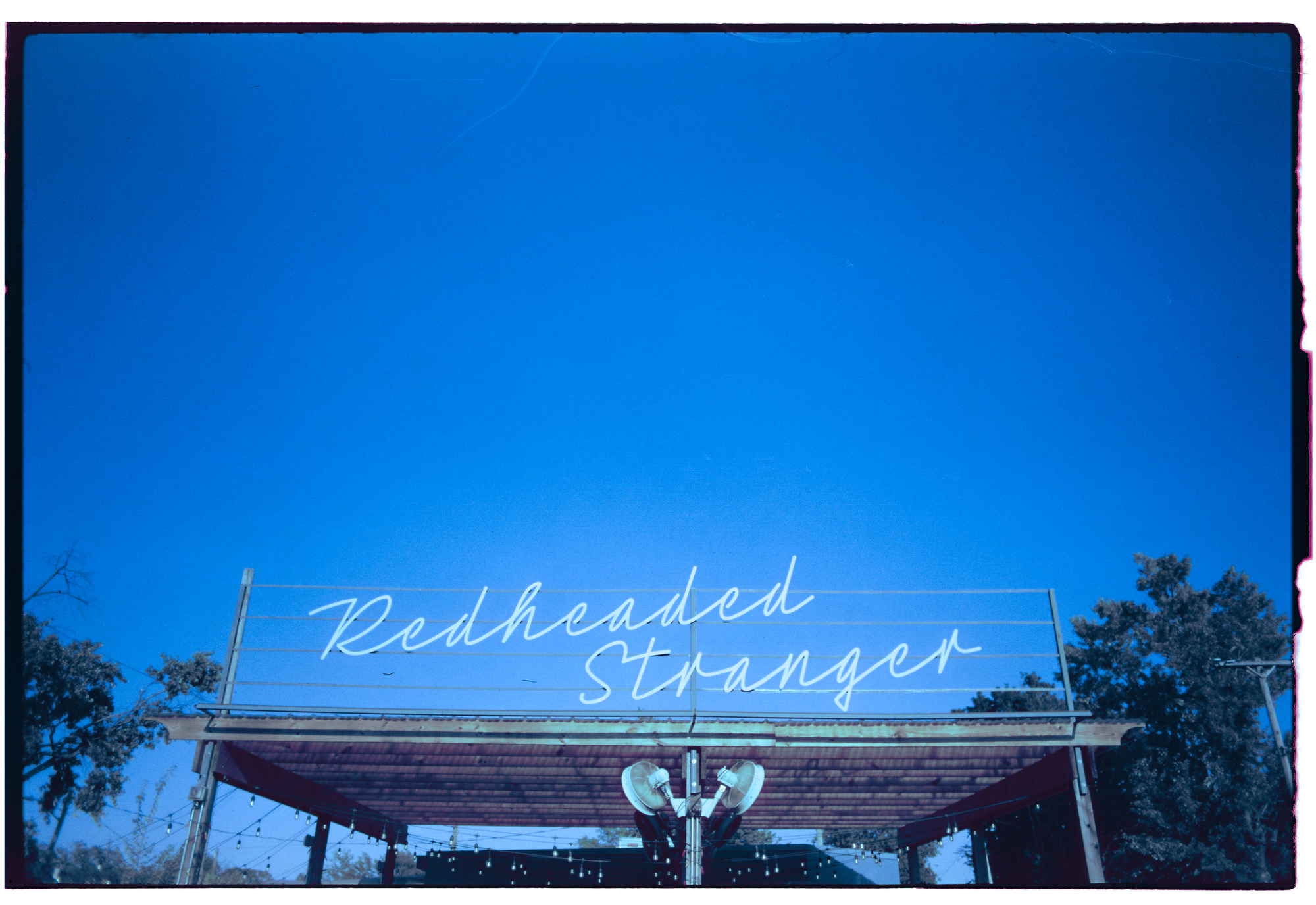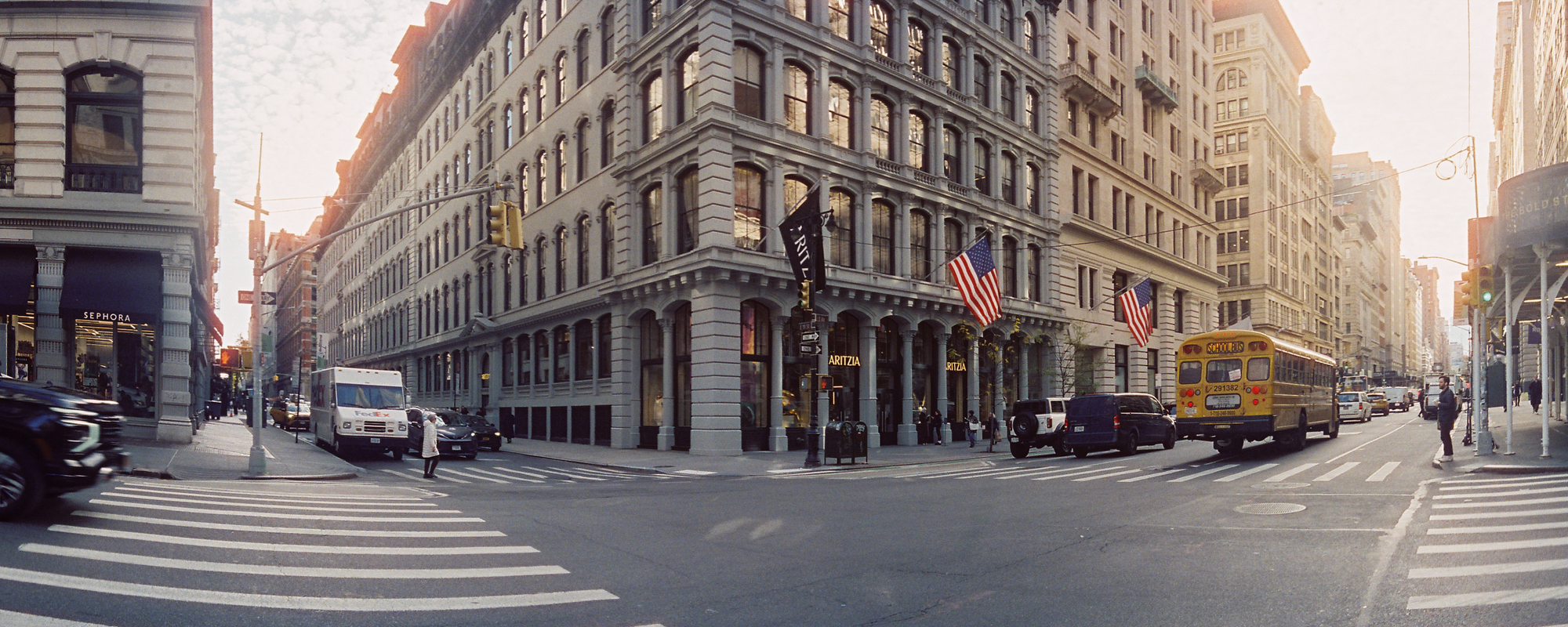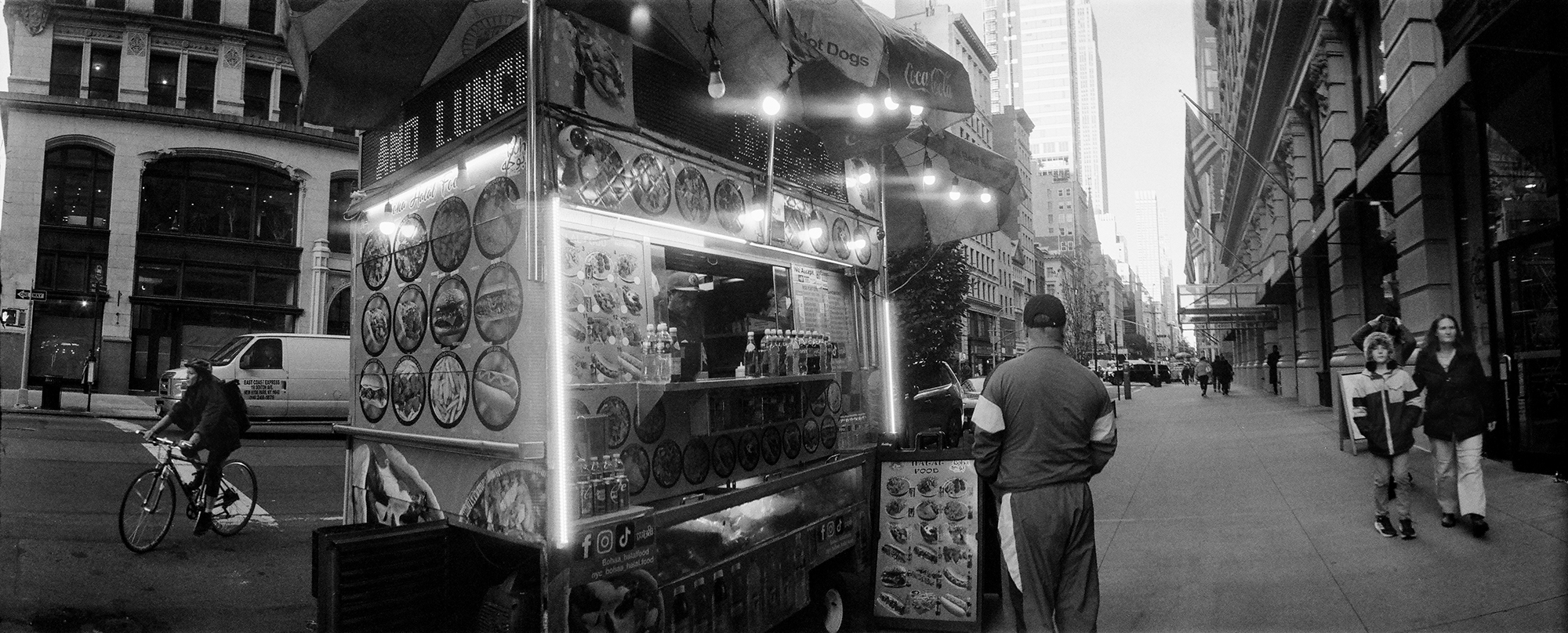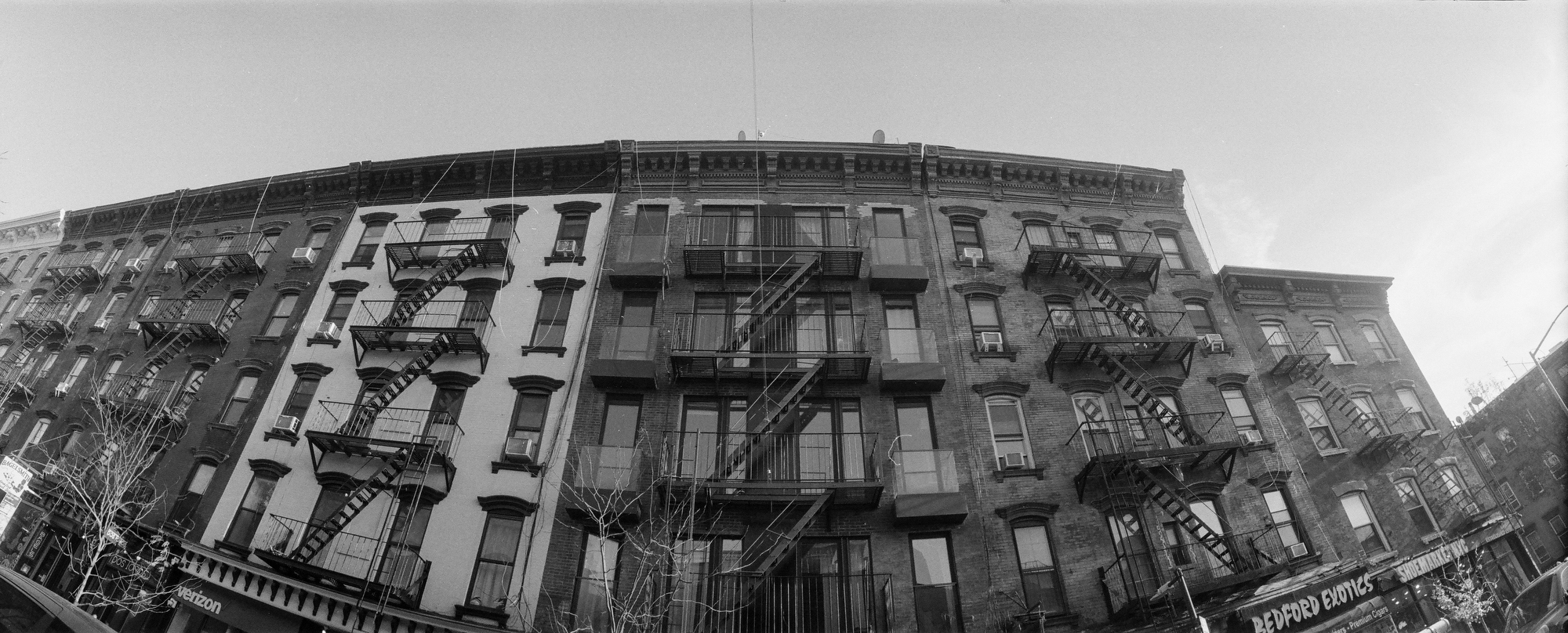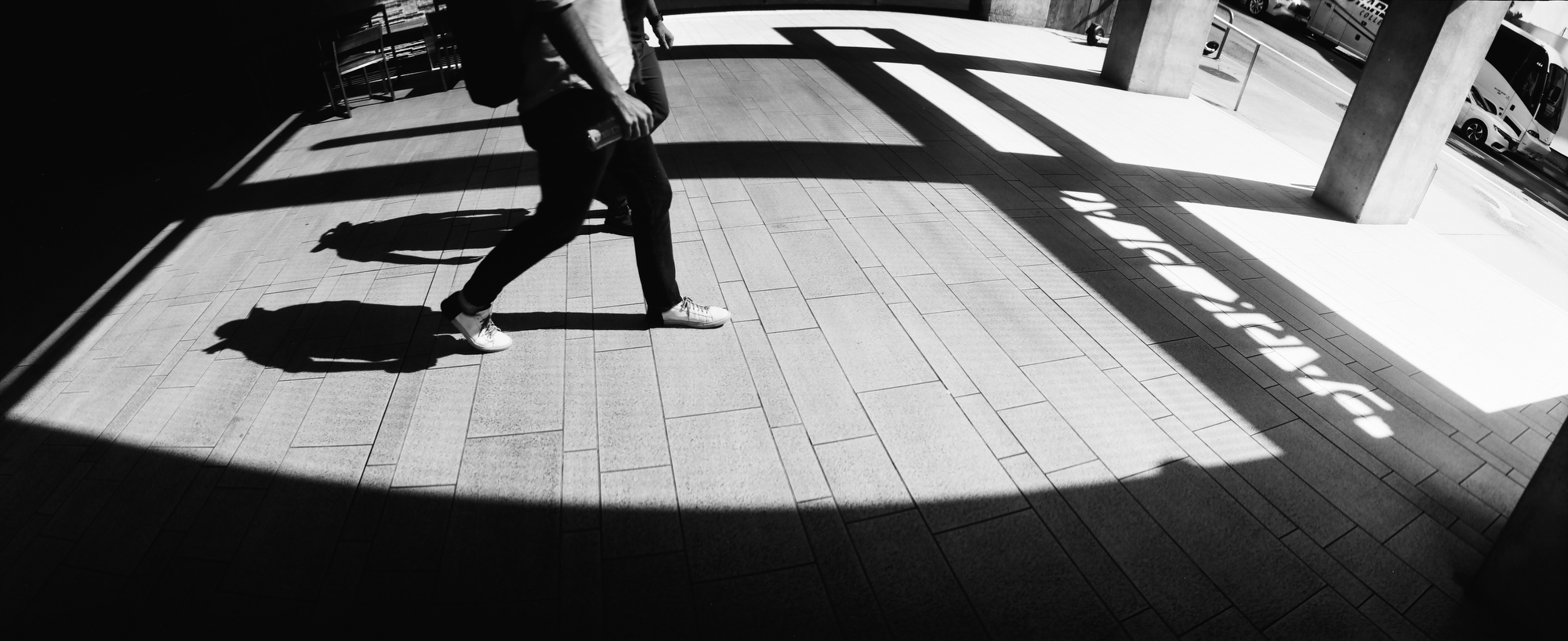
Days end below grade, crossing concrete,
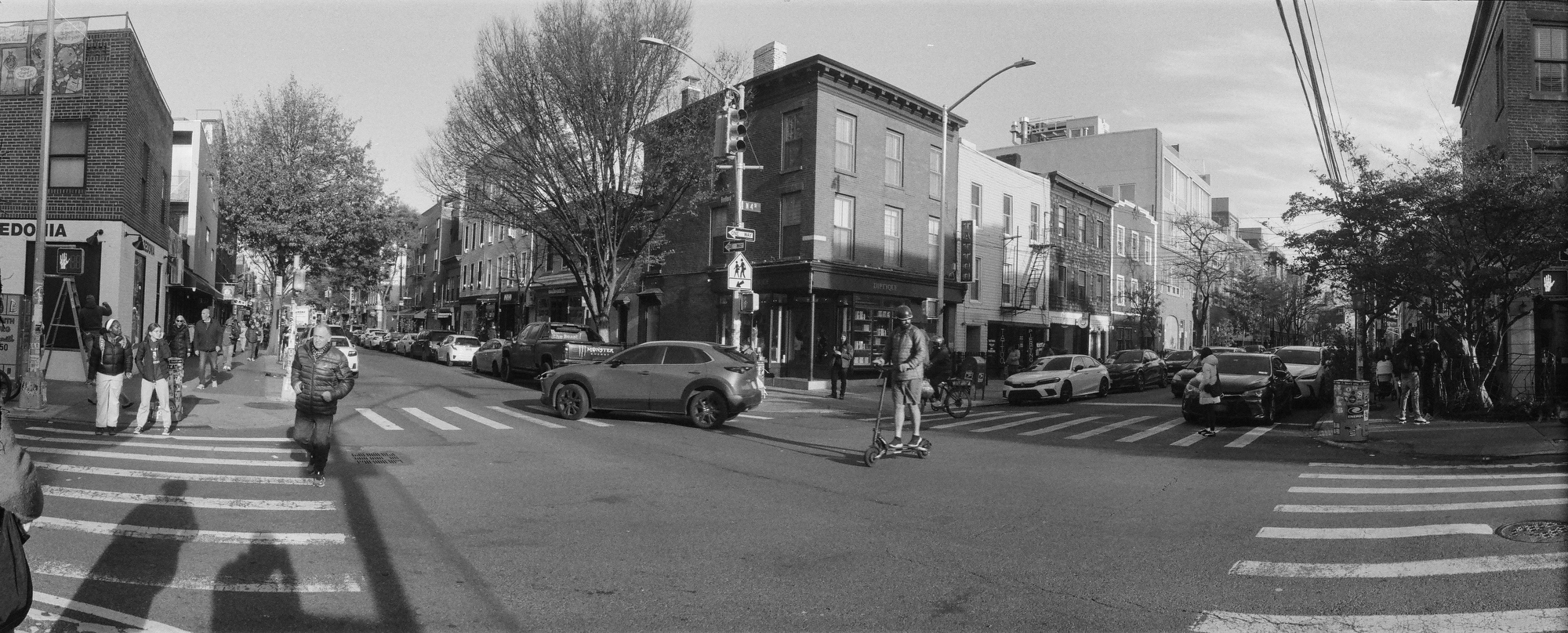
Departing park place, with the last of the days light stretching across the city.
Hilltop trees and earth excavated over a century ago.
Sight lines low, avoidant of the warm light.
Our departure on repeat.
Days end below grade, crossing concrete,
Departing park place, with the last of the days light stretching across the city.
Hilltop trees and earth excavated over a century ago.
Sight lines low, avoidant of the warm light.
Our departure on repeat.

In Post Alley below Pike Place Market in Seattle, every direction presents another layer of graffiti, signs, staircases, storefronts, and people weaving through narrow passages. Add in the bright summer sky pouring into the alley while the alley below remain in deep shadow, and it becomes an exposure challenge as much as a compositional one.
I loaded my Widelux F7 with Rollei RPX 100 and embraced the challenge. Rather than exposing for the highlights or the shadows alone, I metered both and settled on an exposure somewhere in the middle, hoping the negative would preserve the atmosphere I experienced standing there.
The result is a photograph that invites your eye to wander. From the bright opening at the end of the alley through the shadowed corners beneath the market and up the stairs to the sunlight.
Rather than treating Pike Place Market as an iconic landmark, I wanted this photograph to explore it as a living public space. The Widelux F7’s swing-lens panoramic perspective creates a natural, immersive sweep across the scene, allowing architecture, pedestrians, and open space to exist in careful balance. The market entrance anchors one side of the frame while the surrounding buildings and receding street draw the eye toward the distance. Individual people become part of a larger rhythm, turning an ordinary afternoon into a study of movement, geometry, and the way cities quietly choreograph everyday life.

Photographed on Rollei RPX 100, the black-and-white film softens the distractions of color and emphasizes form, light, and texture instead. The film’s smooth tonal range preserves detail in both the deep shadows beneath the awning and the bright afternoon sky, giving the image a calm, observational quality despite the busy scene. More than documenting a famous location, the photograph reflects my ongoing fascination with how panoramic film photography transforms familiar places into layered studies of space, atmosphere, and the experience of seeing.
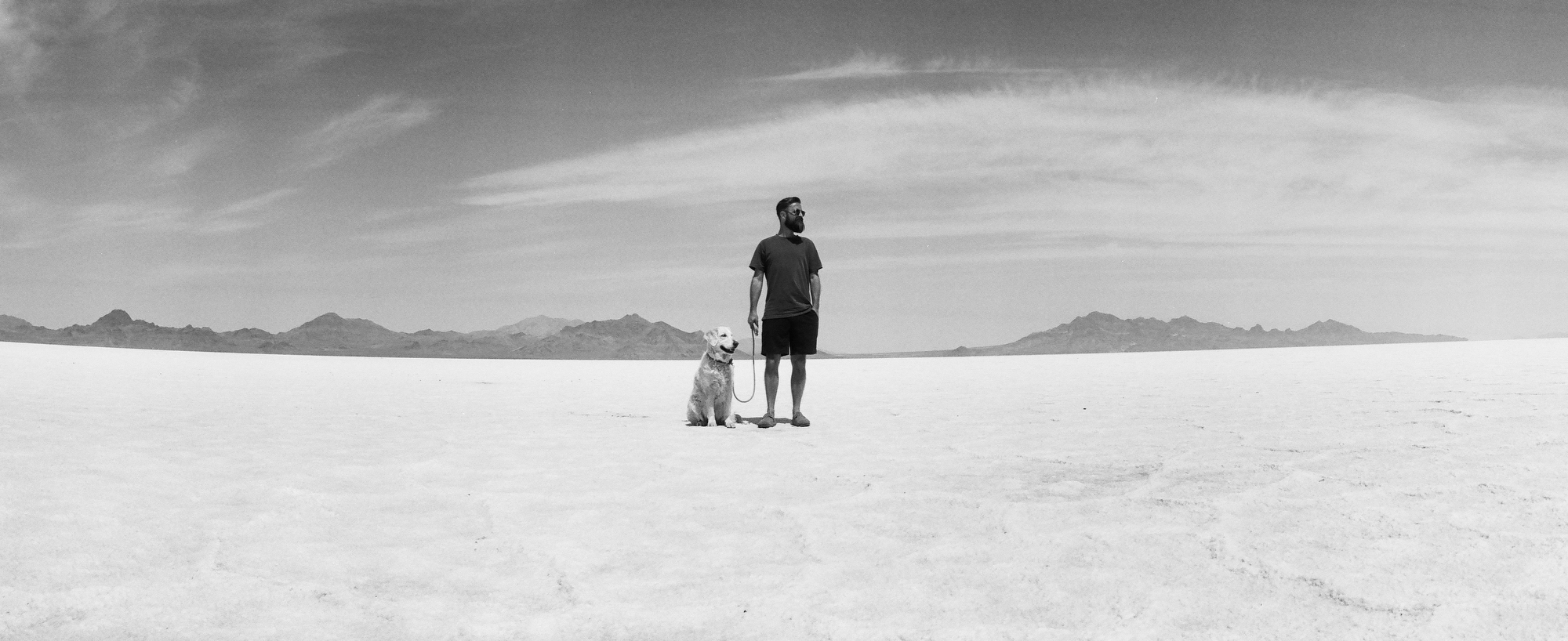
On our drive from Salt Lake City to Seattle, we stopped to explore the Bonneville Salt Flats. Sabrina photographed Zaya and me with my Widelux panoramic camera loaded with Ilford Pan F Plus 50 35mm film, preserving a quiet moment from our cross-country adventure.
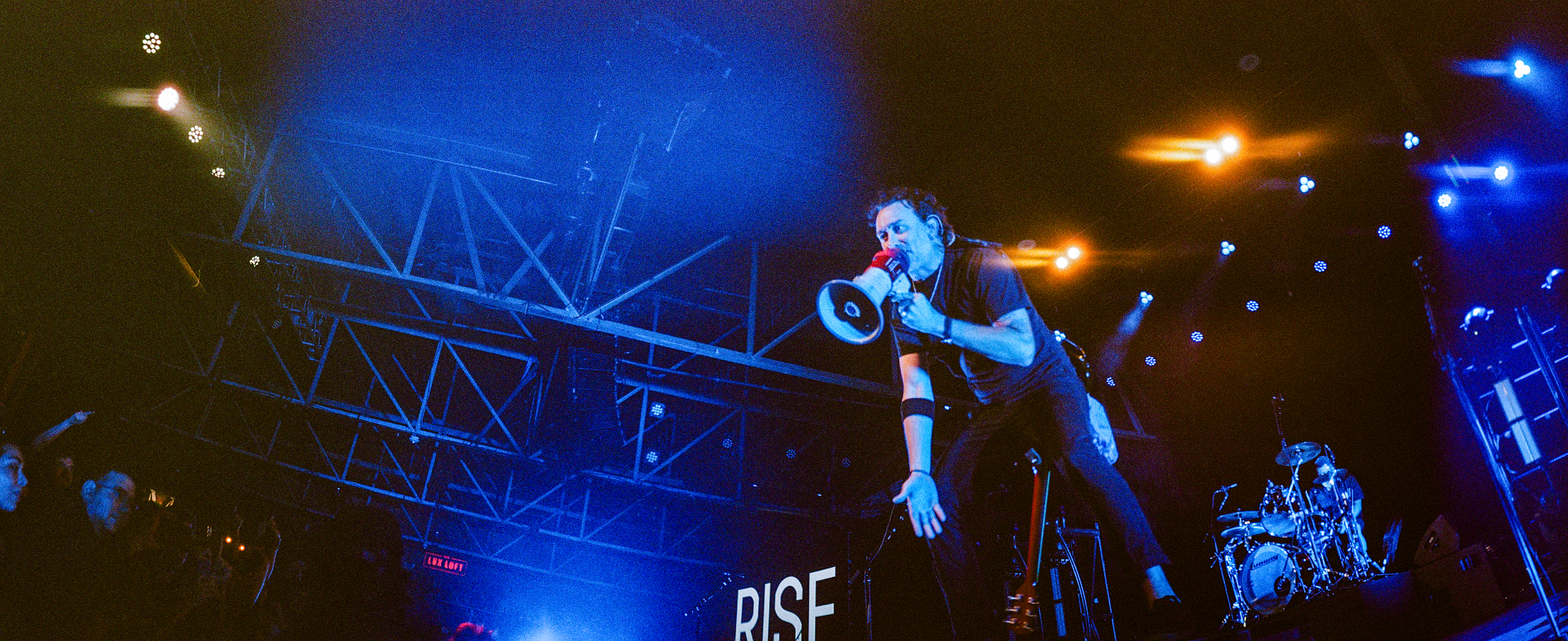
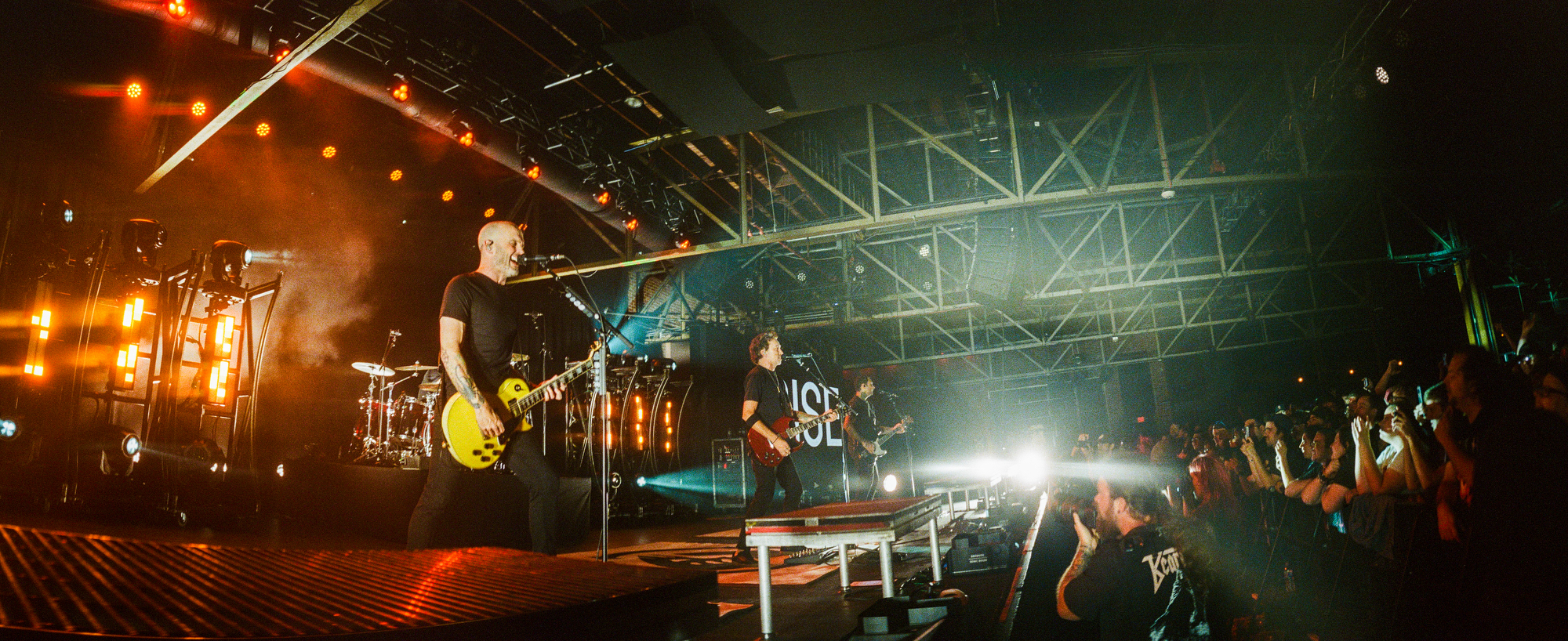
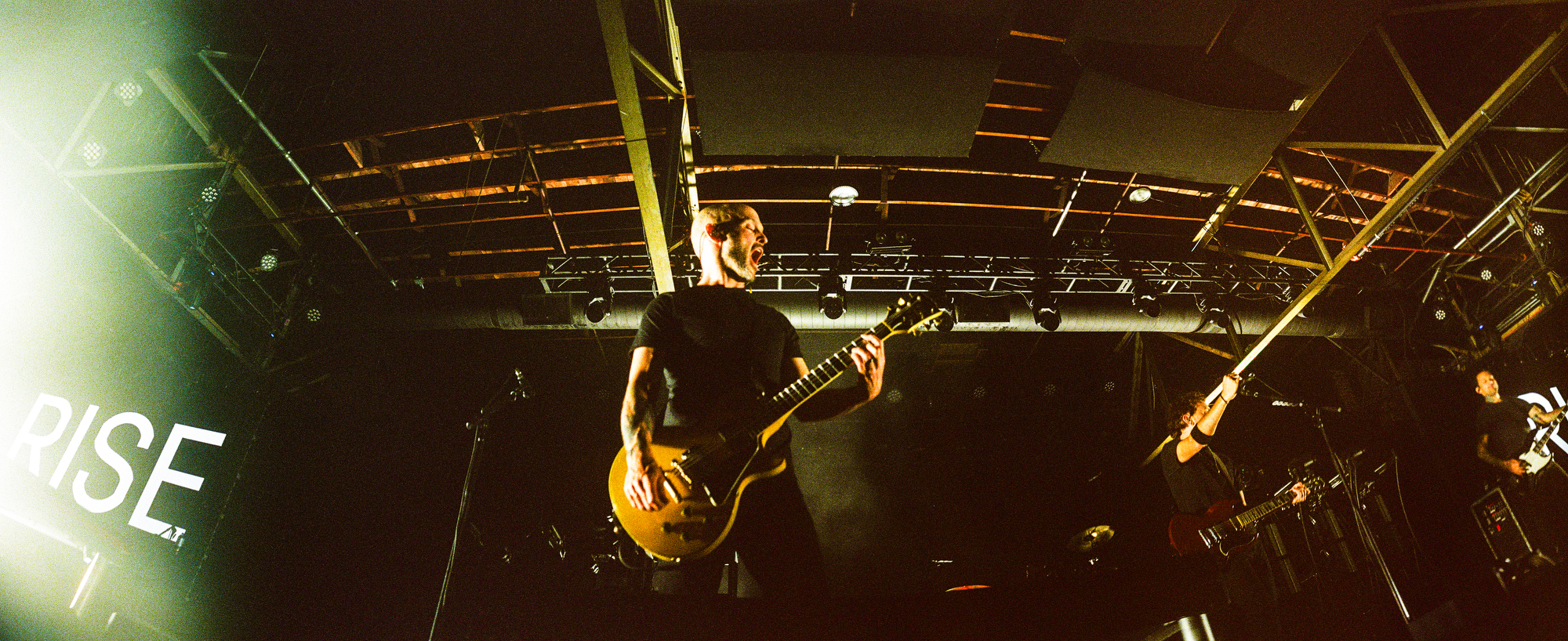
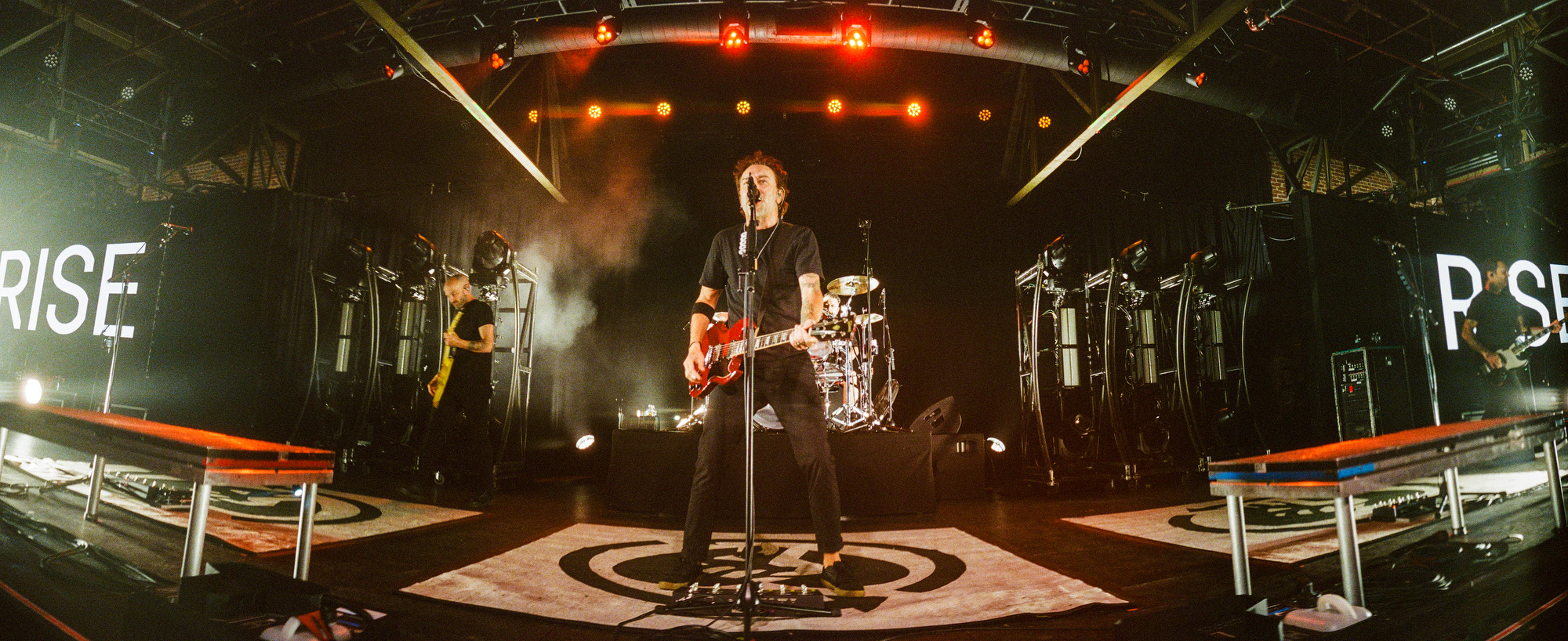
I’ve been photographing concerts since the early 2000s, and after adding a Widelux camera to my bag, I was eager to start bringing it to shows alongside my digital cameras. The unique 35mm panoramic format offered a completely different way of documenting live music, capturing not only the performers but also the atmosphere, stage production, and energy of the crowd within a single sweeping frame.
Due to the camera’s limited settings, Cinestill 800T quickly became my preferred film stock for for concert photography. Its ability to handle low light and vibrant stage lighting made it an ideal choice for live performances. I also continued to learn that timing is everything with a Widelux. Direct stage lights striking the lens as it sweeps across the film can create dramatic exposure shifts and flare, so waiting for the right moment between lighting cues became just as important as anticipating the musicians themselves.
These photographs of Rise Against are part of that ongoing experiment, exploring how a panoramic film camera can capture the scale and intensity of a live concert in a way that feels both immersive and unmistakably analog.
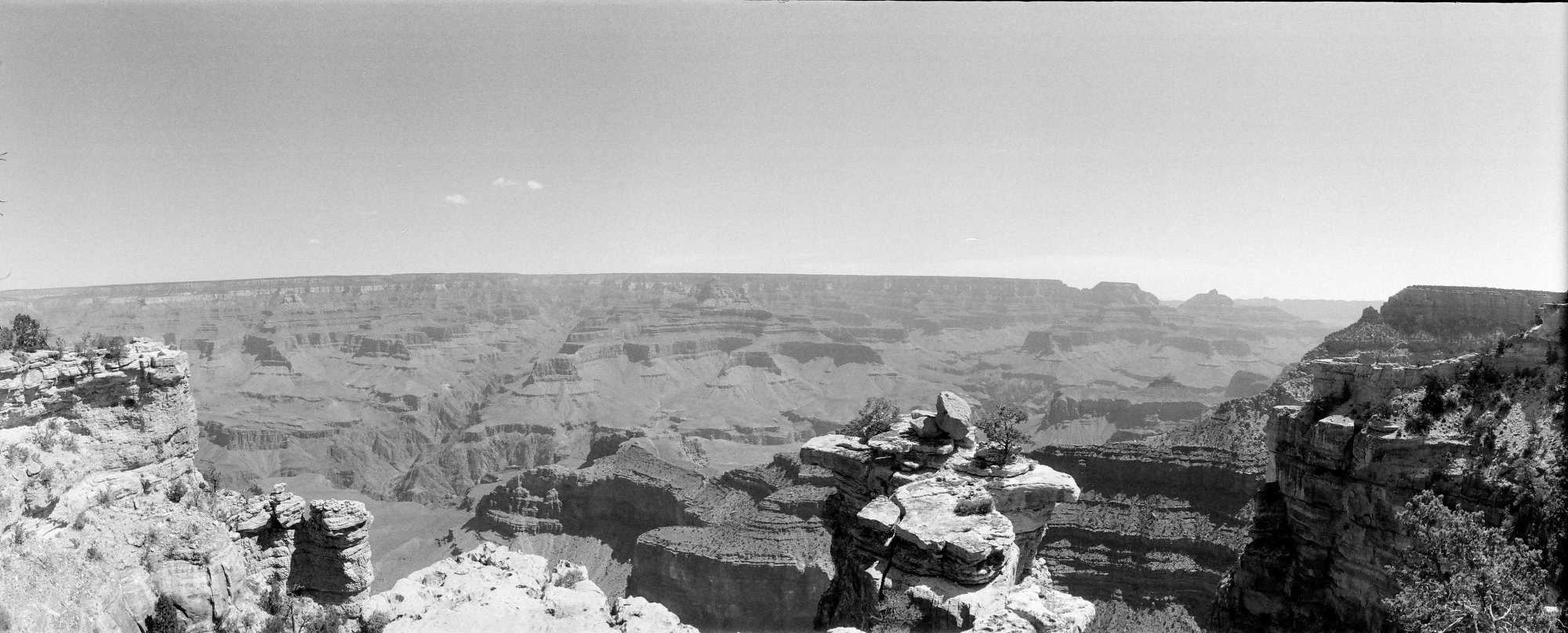
After visiting the Grand Canyon for the first time, I finally understand why people say that no photograph can capture what it feels like to stand at the edge. The overwhelming sense of scale, the depth stretching endlessly into the distance, and the slight feeling of vertigo as you look down are impossible to translate into a two-dimensional image.
I brought along my Widelux, knowing its sweeping panoramic frame would do a better job than a standard 35mm camera at conveying the landscape. It certainly captured more of the canyon’s vastness, pulling the viewer across the scene from edge to edge. But even with its unique perspective, the photograph only hints at the experience.
Some places simply have to be felt in person. The Grand Canyon is one of them, and this frame serves more as a reminder of that moment than a recreation of it.
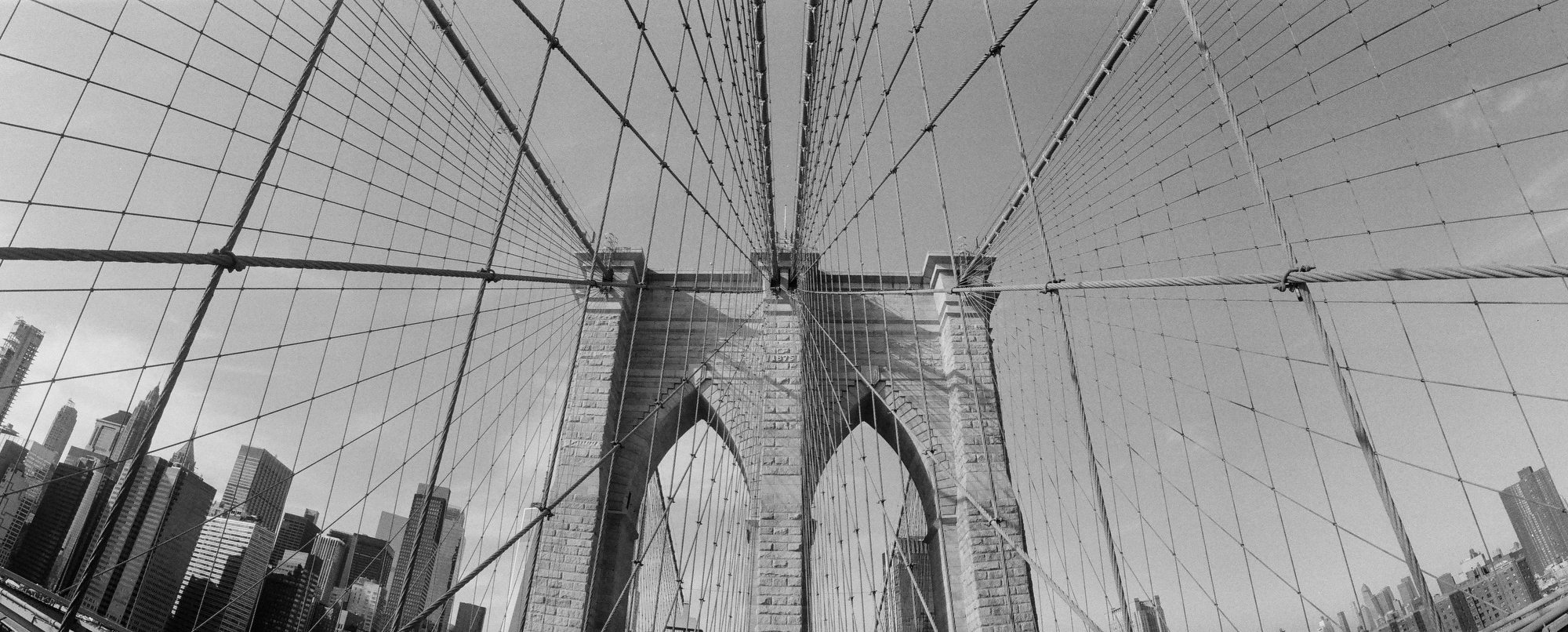
The Widelux captures an expansive 35mm panoramic frame, emphasizing the bridge’s sweeping cables, massive stone towers, and the scale of the surrounding skyline in a way that traditional cameras simply can’t.
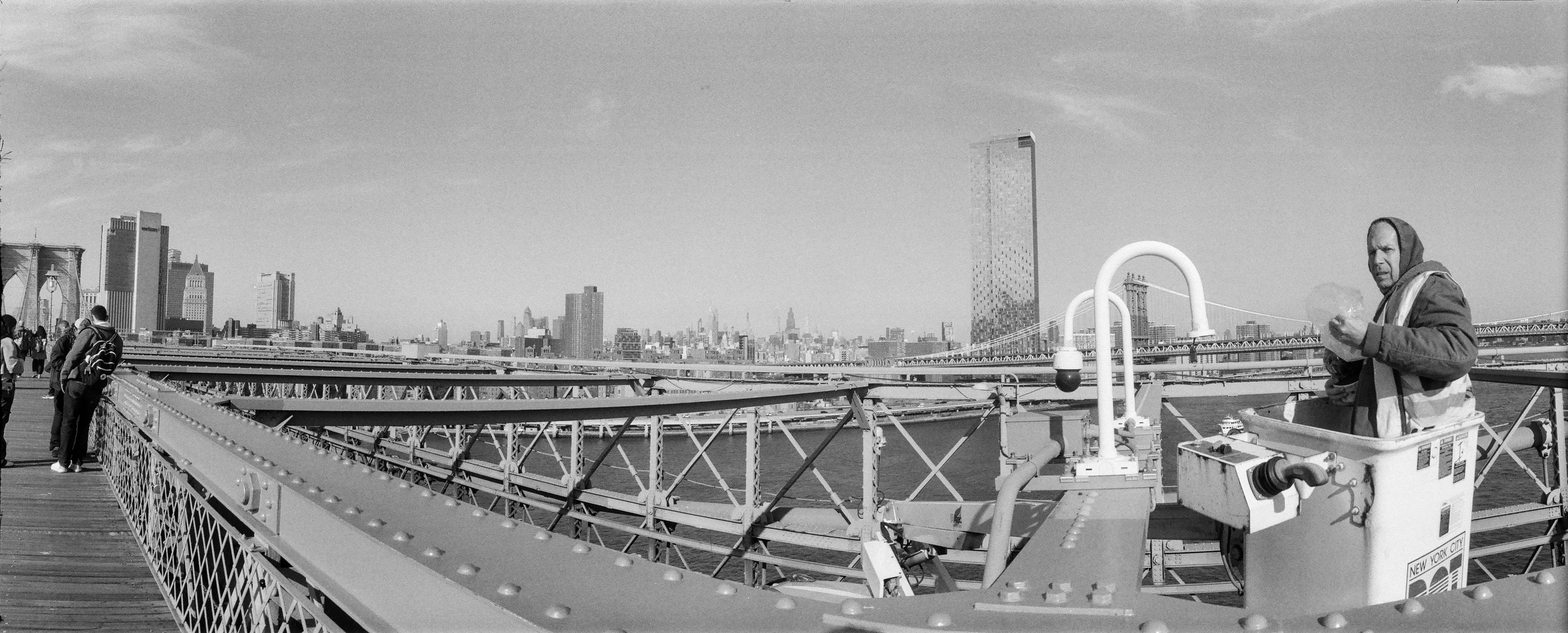
While crossing the bridge, I was equally drawn to the everyday moments unfolding around its architecture. In one frame, a worker locks eyes with the camera while replacing a security camera high above the East River, adding an unexpected human element to one of the world’s most iconic engineering structures. Together, these photographs explore both the timeless design of the Brooklyn Bridge and the constant work required to keep it functioning for the millions of people who cross it each year.
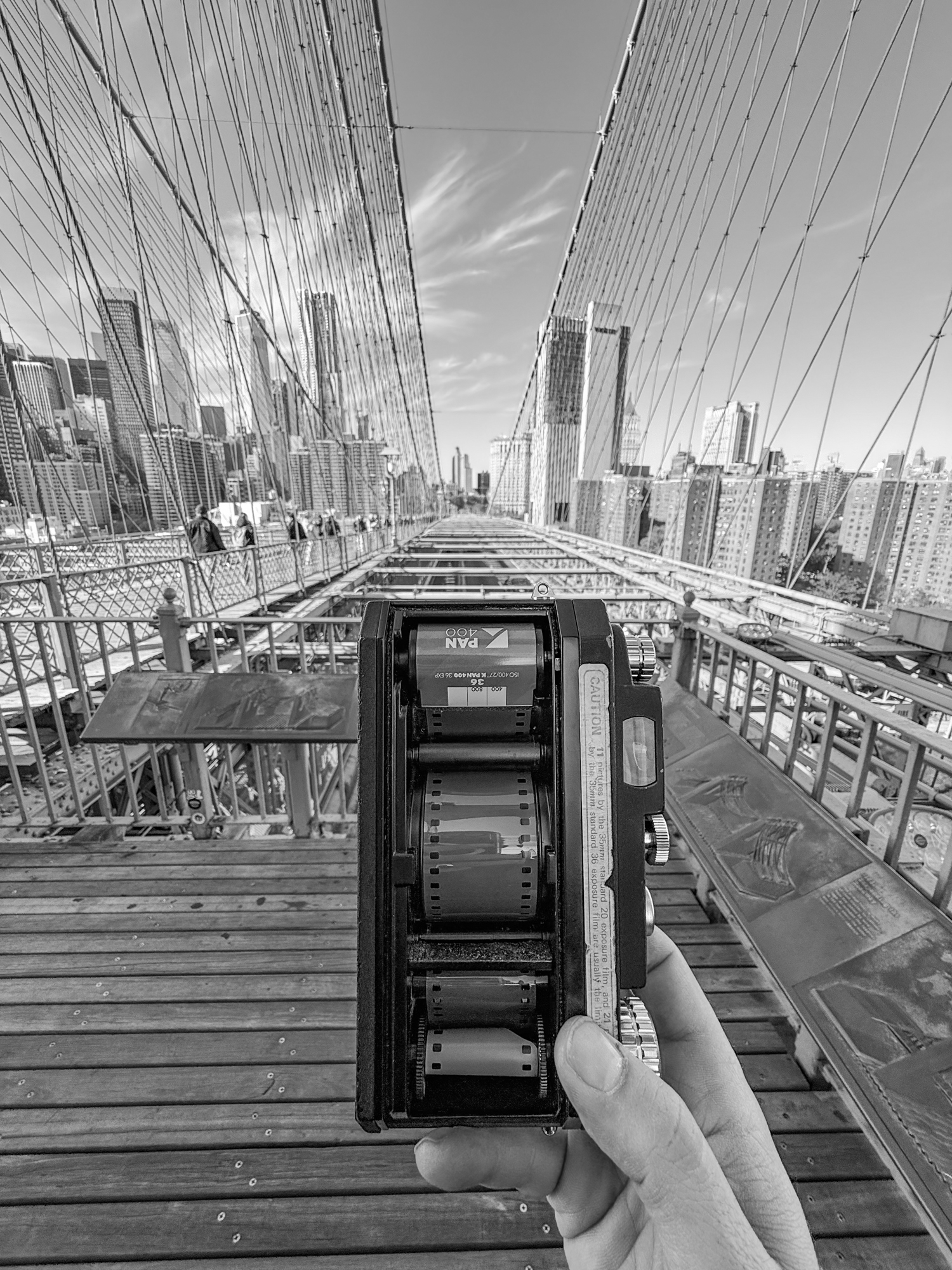
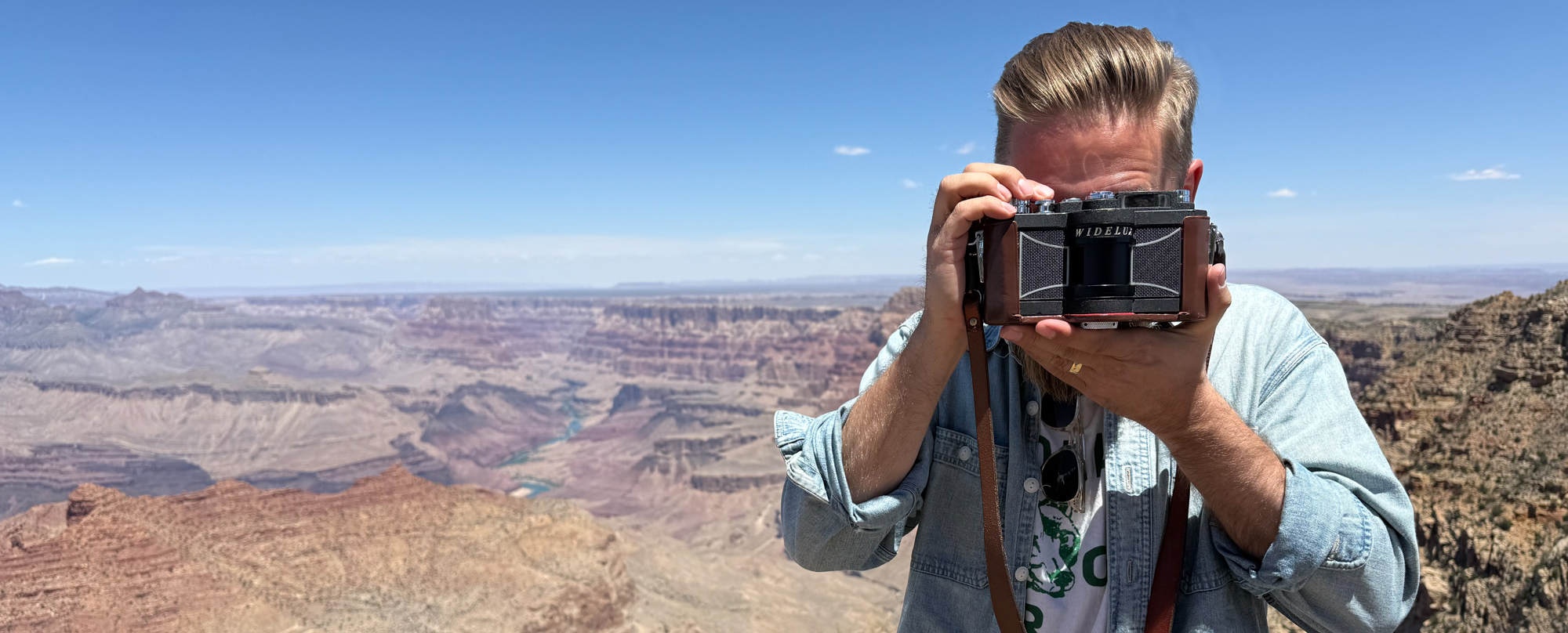
Since the Widelux lacks a film speed dial, I’ve gotten into the habit of photographing the freshly loaded film with my iPhone as a quick reminder of what’s in the camera. More of my widelux work can be found by scrolling this blog or on my website.
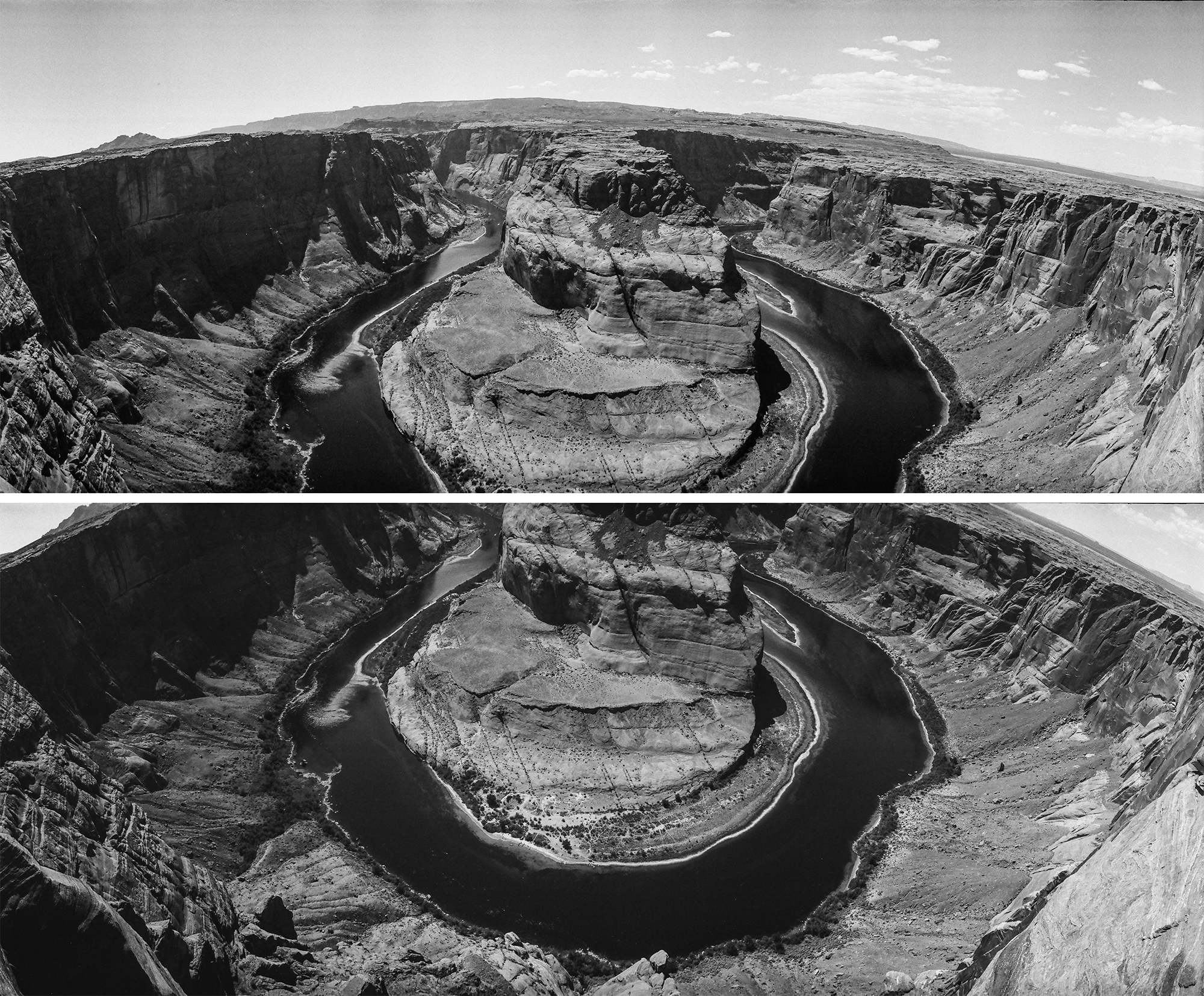
Horseshoe Bend is one of those rare landscapes that immediately challenges the limits of photography. No matter what camera you bring, the scene is simply larger than the frame. During our cross-country drive from Nashville to Seattle, we stopped at Horseshoe Bend in Arizona and I set out to photograph it with a Widelux panoramic film camera loaded with Ilford Pan F Plus 50. The Widelux is known for its unique swing-lens design, which scans across the scene to create a panoramic negative with a field of view far wider than a conventional 35mm camera. The resulting images have a distinctive look, with subtle distortion and stretched perspective near the edges that has become synonymous with Widelux photography.
Even with its panoramic format, I quickly realized that a single frame wasn’t enough. The immense scale of Horseshoe Bend extends beyond what any film camera can truly capture, and while the Widelux came closer than most, the canyon still felt constrained by the boundaries of the image. Rather than hiding that limitation, I chose to embrace it. These two photographs were made from the same vantage point and are intentionally displayed stacked one above the other. Together they serve as a reminder that every camera, regardless of format, has limits. Sometimes the most honest way to photograph a landscape is to acknowledge that the scene is larger than the frame itself.
Photographed on a Widelux F7 panoramic film camera using Ilford Pan F Plus 50 black-and-white film, these images are less about documenting Horseshoe Bend and more about exploring the relationship between landscape, perspective, and photographic format. The vast canyon walls, the winding Colorado River, and the sheer scale of the overlook are difficult to comprehend in person and nearly impossible to contain within a single negative. By presenting both frames together, I hope to communicate not only the size of Horseshoe Bend but also the limitations—and beauty—of film photography itself.

As an architectural photographer, I’m constantly looking for viewpoints that reveal the relationship between a city and its surrounding landscape. This photograph was made from the John Seigenthaler Pedestrian Bridge overlooking the Cumberland River, one of the best locations to appreciate the scale and character of the Nashville skyline. From this vantage point, the river acts as a natural foreground, separating the city’s modern architecture from the viewer while creating a sense of depth that defines the downtown skyline.
The image was photographed using a Widelux panoramic film camera, a unique swing-lens camera that exposes a panoramic negative by rotating the lens during the exposure. Unlike a conventional 35mm camera, the Widelux captures an exceptionally wide field of view, making it particularly well suited for architectural and urban landscapes. The panoramic format allowed me to include both downtown Nashville and Nissan Stadium across the Cumberland River in a single frame, creating a perspective that more closely resembles the experience of standing on the bridge and taking in the city.
One of the qualities I appreciate most about the Widelux is the way it renders space. The camera’s swing-lens design introduces subtle distortion near the edges of the frame, stretching perspective and emphasizing the breadth of the scene. In a cityscape like Nashville, that distortion becomes part of the visual language of the photograph, reinforcing the scale of the skyline and the sweeping curve of the river below.
Photographed from the John Seigenthaler Pedestrian Bridge, this image captures a moment where architecture, infrastructure, and landscape converge. The Cumberland River, the downtown Nashville skyline, and the city’s evolving collection of buildings all come together within a single panoramic frame—a view that the Widelux was uniquely designed to capture.
Lower Broadway is one of Nashville’s most recognizable streets, where historic architecture, live music, and constant activity come together in a uniquely urban setting. I photographed this evening scene using a Pentax ME Super 35mm film camera loaded with Rollei RPX 400 film. The combination of black-and-white film and the fading evening light helped preserve the atmosphere of the street, from the illuminated storefronts to the historic building facades that define Broadway’s character.
Rollei RPX 400 handled the challenging lighting conditions well, retaining detail in both the bright signs and the darker shadows of the street. As an architectural photographer, I’m often drawn to how buildings shape the identity of a city, and Lower Broadway’s collection of historic commercial structures remains one of Nashville’s most iconic urban landscapes. This photograph captures a brief moment when the architecture, light, and activity of downtown Nashville all came together within a single frame.

The Franklin Theatre Marquee in Tennessee, photographed with a widelux panoramic film camera.


Nashville’s Parthenon shot on a Widelux 35mm panoramic camera with Ilford SFX Infrared 200 film