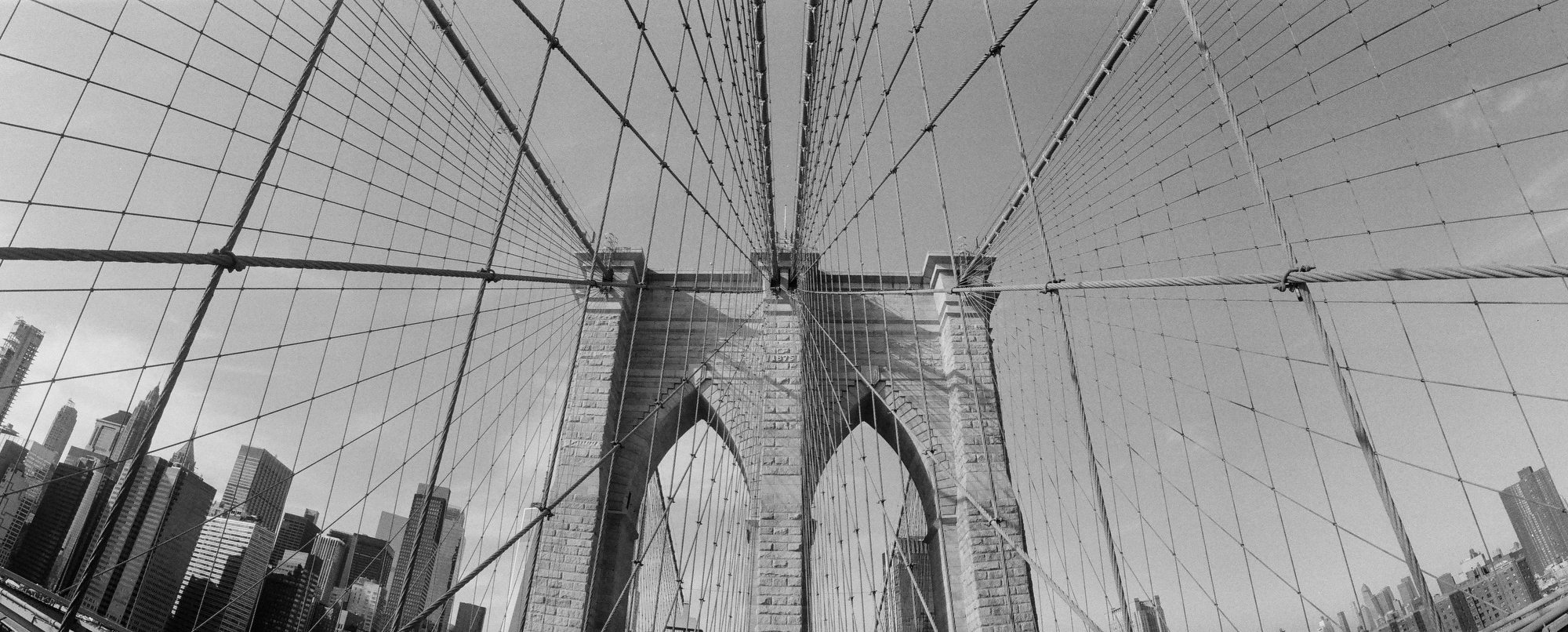
The Widelux captures an expansive 35mm panoramic frame, emphasizing the bridge’s sweeping cables, massive stone towers, and the scale of the surrounding skyline in a way that traditional cameras simply can’t.
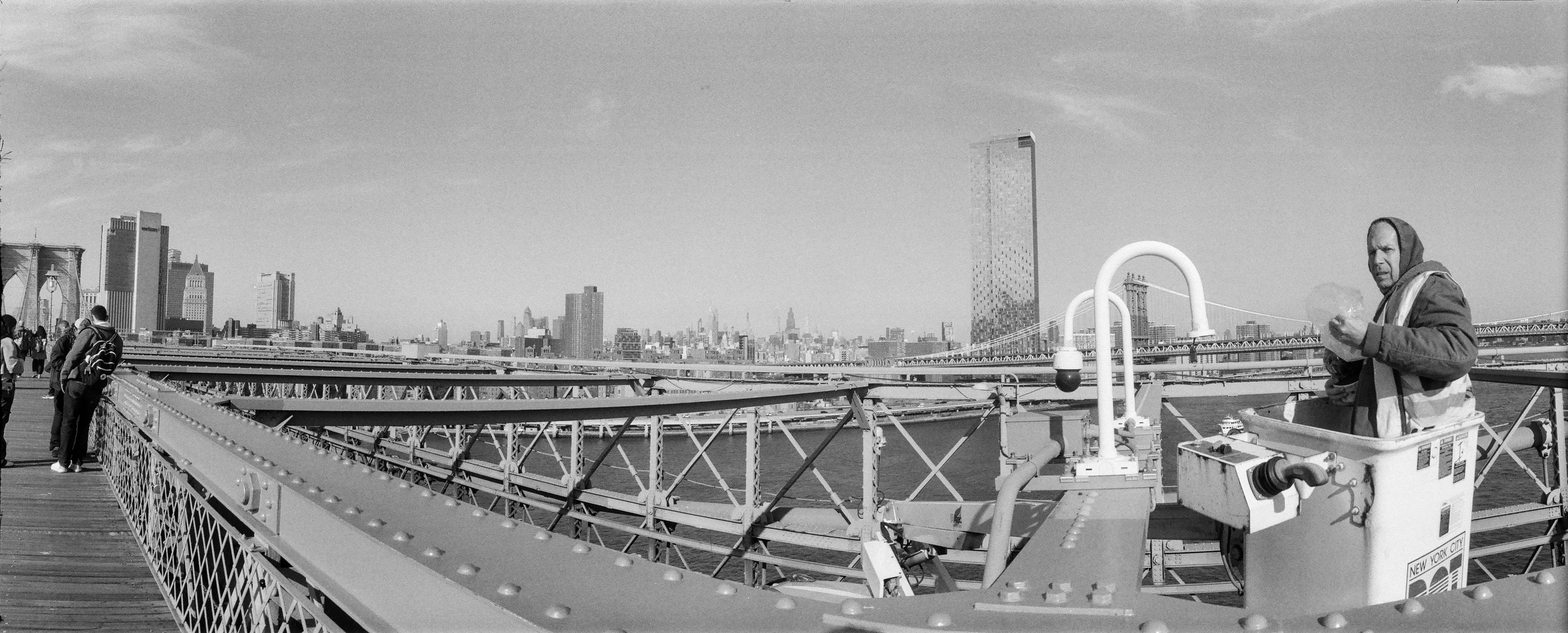
While crossing the bridge, I was equally drawn to the everyday moments unfolding around its architecture. In one frame, a worker locks eyes with the camera while replacing a security camera high above the East River, adding an unexpected human element to one of the world’s most iconic engineering structures. Together, these photographs explore both the timeless design of the Brooklyn Bridge and the constant work required to keep it functioning for the millions of people who cross it each year.
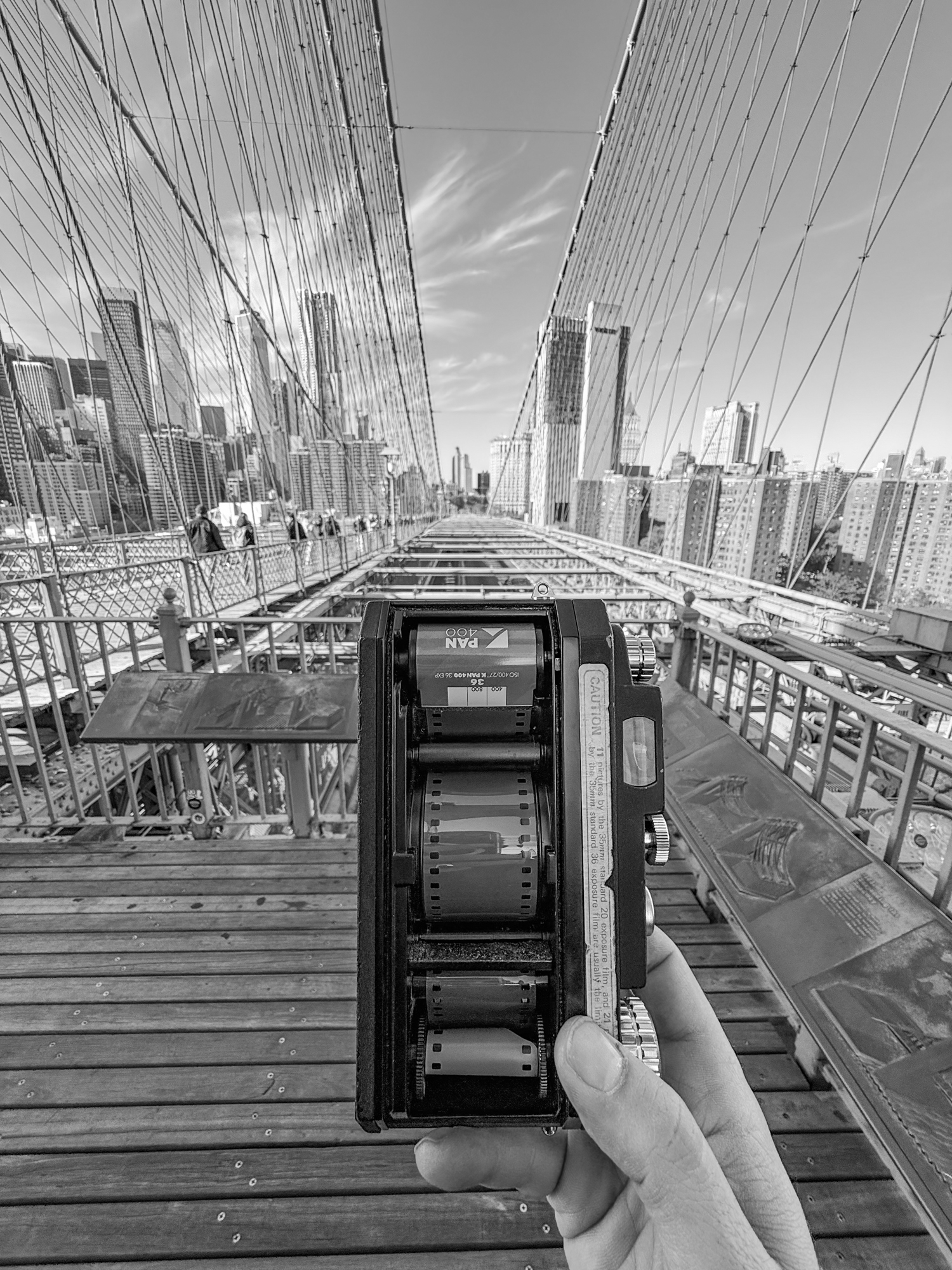
Since the Widelux lacks a film speed dial, I’ve gotten into the habit of photographing the freshly loaded film with my iPhone as a quick reminder of what’s in the camera. More of my widelux work can be found by scrolling this blog or on my website.
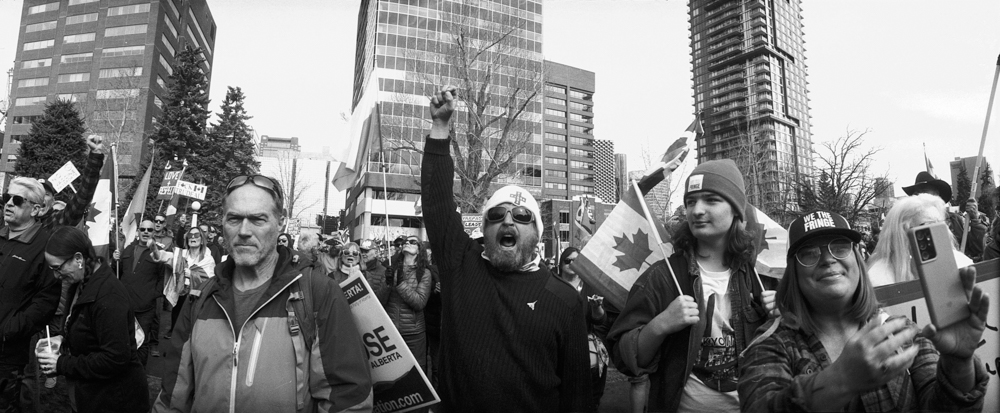
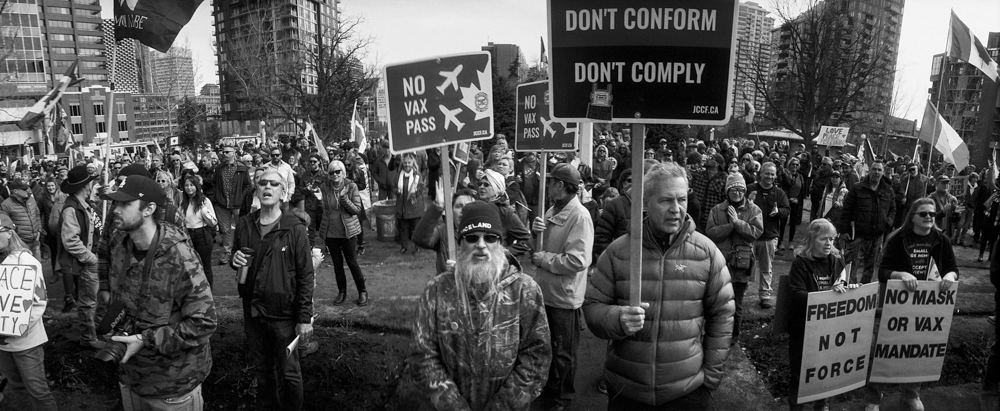
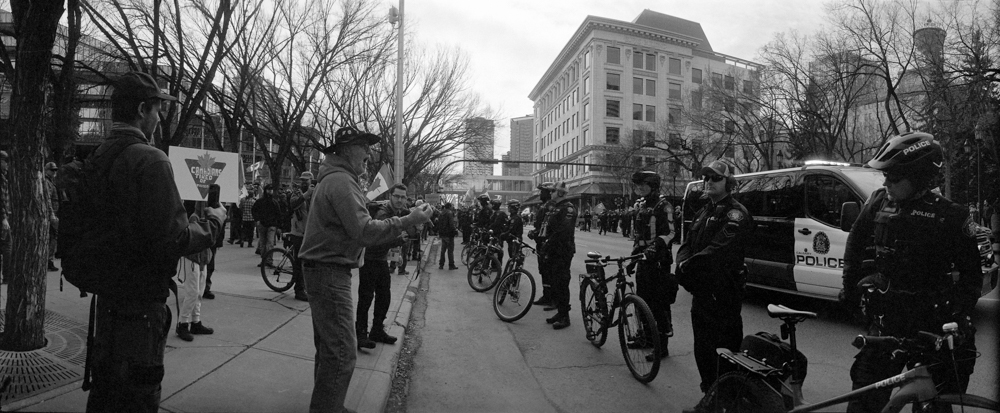
On March 19, 2022, I headed into downtown Calgary to document one of the many demonstrations that emerged during the COVID-19 pandemic. As a professional photographer, I had spent much of the previous two years watching assignments disappear and work slow dramatically. Like many people, my routines had been disrupted, and I found myself spending far less time with a camera in my hands than I was accustomed to. The protest offered an opportunity to dust off my camera, get back out into the city, and document the world around me once again.
Debates surrounding vaccines, public health measures, and government mandates had become deeply divisive, and the so called “Freedom Protest” reflected just how polarized public opinion had become. Rather than participating, my goal was simply to observe and create a photographic record of the moment.
For this series, I photographed the protest using a Widelux panoramic camera on black and white 35mm film. The Widelux’s swing-lens design allowed me to capture a much broader view of the scene than a conventional camera, placing individuals within the larger crowd and providing context that would have been difficult to achieve in a standard frame. The panoramic format felt particularly well suited to documenting public demonstrations, where the scale of the gathering is often as important as any individual subject.
Black and white film helped simplify the images, drawing attention to expressions, signs, gestures, and interactions rather than color. Looking back, these photographs are less about politics and more about documenting a moment in Calgary’s history when conversations around personal freedom, public health, and government policy dominated daily life. Regardless of perspective, the images serve as a visual record of a period that shaped communities across Canada and around the world, while also marking my own return to documenting life beyond my front door.